Why Hospitals Are Losing Patients Without Realizing It
A patient tries calling your Hospitals al to book an appointment. The line is busy. They try again—still no answer. Within minutes, they’ve already moved on to another Hospit . It sounds simple, but this is happening far more often than most doctors realize.
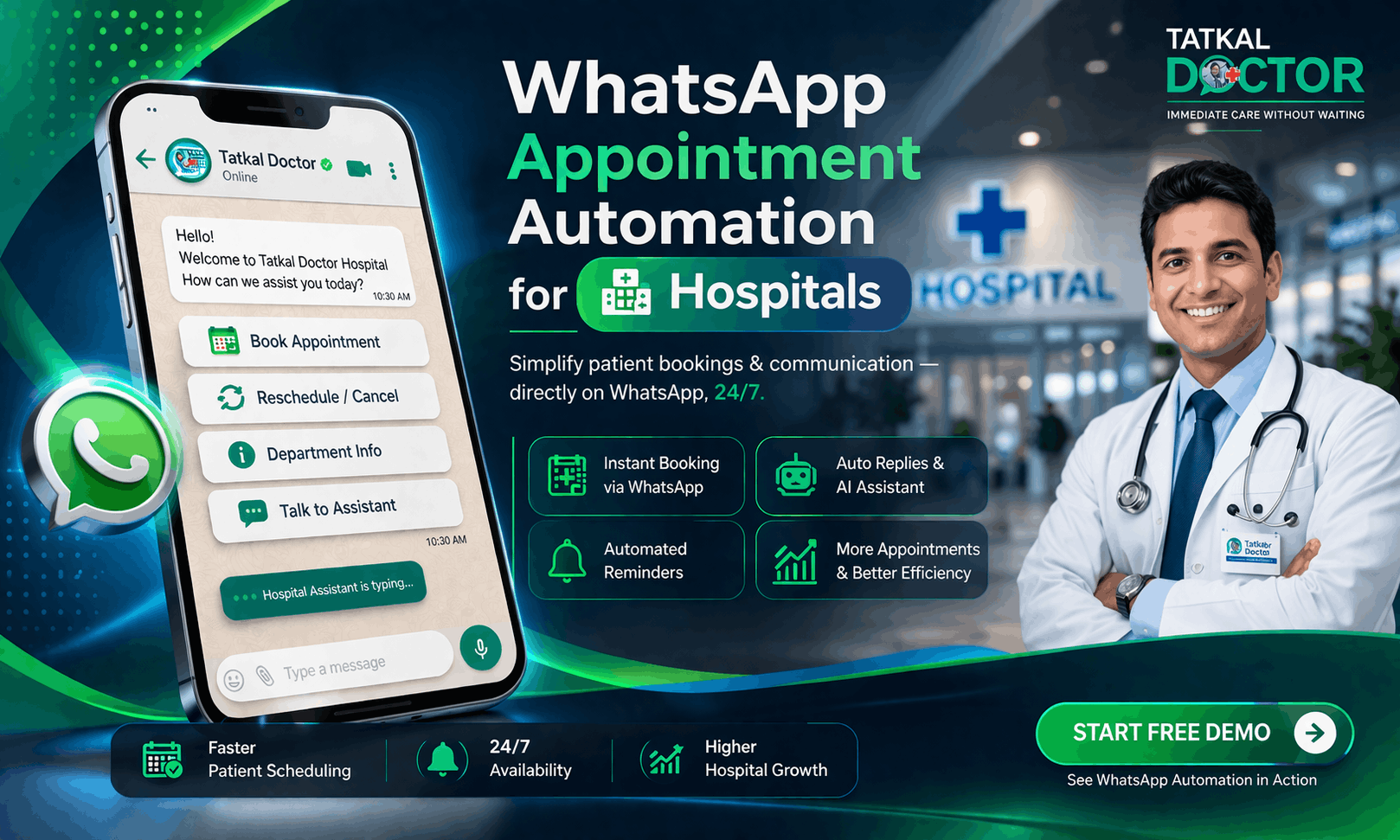
This is where a WhatsApp appointment system for Hospital stops being just a convenience and starts becoming essential. Patients today don’t want to wait on calls or deal with delays. They prefer quick, simple communication—and WhatsApp is already where they’re most comfortable.
Hospitals that recognize this shift are quietly improving their booking flow, while others continue losing patients without even noticing.
How WhatsApp Changes the Way Patients Book Appointments
Think about how people communicate every day. Whether it’s chatting with family or ordering services, WhatsApp has become second nature.
When Hospitals automate Hospitals booking on WhatsApp, they meet patients exactly where they already are. There’s no learning curve, no extra app to download, and no confusion.
A patient can simply send a message like, “I want to book an appointment,” and instantly receive available slots, doctor details, and confirmation.
It feels effortless—because it fits naturally into how people already communicate.
What Happens Inside a WhatsApp Appointment System
A well-designed hospital appointment automation system works quietly in the background, but it handles multiple tasks at once without any friction.
When a patient sends a message, the system responds intelligently:
It understands what the patient is asking
It shares available appointment slots
It confirms bookings instantly
It sends reminders before the visit
It even manages rescheduling or cancellations when needed
This isn’t just automation—it’s structured, reliable communication that removes confusion and saves time for everyone involved.
Why Manual Booking Systems Create Bottlenecks
Many Hospitals still depend on phone calls and manual registers. While this approach has worked for years, it starts to break down when demand increases.
During busy hours, staff simply can’t respond to every call or message immediately. Patients are left waiting—and often, they don’t wait for long.
Some common challenges Hospitals face include:
Missed calls during peak hours
Double bookings caused by manual errors
Staff spending too much time answering repetitive queries
No proper system to track or manage appointments
Individually, these may seem like small issues. But together, they slowly impact both patient experience and Hospital srevenue.
The Real Advantage of Automating Hospital Booking on WhatsApp
When Hospitals automate Hospitals booking via WhatsApp, the difference is noticeable almost immediately. It’s not just about saving time—it’s about improving how the entire system runs.
Here’s what changes in practical terms:
Patients can book appointments anytime, even outside working hours
Responses are instant, not delayed
Appointment data stays organized and easy to access
Staff workload reduces significantly
Communication becomes consistent and error-free
The result is a smoother, more reliable experience—for both patients and Hospitals staff.
A Simple Example From Daily Practice
Imagine a patient messaging your Hospitals at 10:30 PM. Normally, they’d have to wait until the next morning to call. By then, they might forget—or worse, choose another Hospital.
With a WhatsApp appointment system for Hospitals the response is immediate. The system shares available slots, confirms the booking, and even sends a reminder for the next day.
From the patient’s side, it feels quick and convenient. From the Hospitals side, it’s one more confirmed appointment—without any extra effort.
Addressing Concerns About Automation
It’s completely natural for Hospitals owners to wonder if automation might feel impersonal. In reality, it depends on how the system is designed.
Modern WhatsApp automation tools are built to feel conversational and easy—not robotic or rigid. They guide patients step by step, keeping the interaction simple and clear.
More importantly, automation takes care of routine queries, while more complex or sensitive situations can still be handled by human staff.
It’s not about replacing people—it’s about freeing them from repetitive tasks so they can focus on what truly matters.
Why Tatkal Doctor Fits Naturally Into This System
Adopting automation is one step. Implementing it correctly is where the real difference lies. That’s exactly where Tatkal Doctor stands out.
Instead of offering generic solutions, they focus on how clinics actually function in real life. Their systems are built around patient behavior and day-to-day Hospitals workflows.
What makes their approach practical and reliable:
Easy setup without disrupting existing operations
Smooth integration with current appointment systems
Customization based on Hospital size and requirements
Ongoing support to improve performance over time
They don’t just provide a tool—they make sure it works effectively in your environment.
When Should a Hospitals Consider WhatsApp Automation?
Not every Hospitals adopts automation immediately, but there are clear signs when it becomes necessary:
Patients regularly complain about delayed responses
Staff feel overwhelmed managing calls and messages
Appointment scheduling becomes messy or inconsistent
Missed bookings start increasing
If any of these sound familiar, moving toward hospital appointment automation is no longer optional—it’s the next logical step.
Cost vs Practical Value
It’s easy to focus on the cost of setting up a system. But a more important question is—how much is being lost without it?
Every missed booking is lost revenue. Every delayed response affects patient trust.
A system that helps automate Hospitals booking on WhatsApp often pays for itself by increasing confirmed appointments and reducing inefficiencies.
So, it’s not just a technical expense—it’s a smarter business decision.
The Bigger Shift in Patient Expectations
Patient expectations have changed. People don’t want to wait on calls or deal with complicated booking processes. They expect quick replies and simple solutions.
WhatsApp fits perfectly into this expectation because it’s already a part of everyday life.
Hospitals that adapt to this shift naturally provide a better experience, while others risk being left behind.
Key Takeaway
A WhatsApp appointment system forHospitals is no longer just an added feature—it’s quickly becoming a standard expectation.
When Hospitals automate Hospitals booking via WhatsApp, they reduce missed opportunities, improve patient satisfaction, and bring more clarity to their operations.
Solutions like those offered by Tatkal Doctor make this transition simple and practical.
For Hospitals looking to grow while maintaining efficiency, this isn’t just about adopting new technology it’s about creating a smoother, more dependable way to connect with patients.