Why Hospitals in India Are Rethinking Appointment Management
Walk into any busy hospital in India, and you’ll notice a familiar scene—crowded waiting areas, long queues at the reception, and patients unsure about when their turn will come. The issue isn’t always the number of patients; more often, it’s how appointments are being managed.
This is exactly where hospital automation in India is beginning to reshape daily operations. Instead of relying on constant phone calls and manual registers, hospitals are gradually shifting toward structured systems that simplify bookings and reduce unnecessary chaos.
One of the most practical changes has been the use of WhatsApp. Since millions of Indians already use it every day, it has naturally evolved into a powerful and convenient channel for patient communication and appointment management.
Why WhatsApp Fits Perfectly Into Healthcare Communication
When someone is dealing with a health concern, the last thing they want is a complicated booking process. They want something simple, quick, and familiar.
That’s why WhatsApp healthcare solutions in India are gaining so much attention. Patients don’t need to learn anything new—they just send a message, and the process begins instantly.
For hospitals, this removes a major barrier. Instead of asking patients to call repeatedly or visit in person just to secure an appointment, everything can now be done within seconds from their phone.
What an Online Appointment System Looks Like in Practice
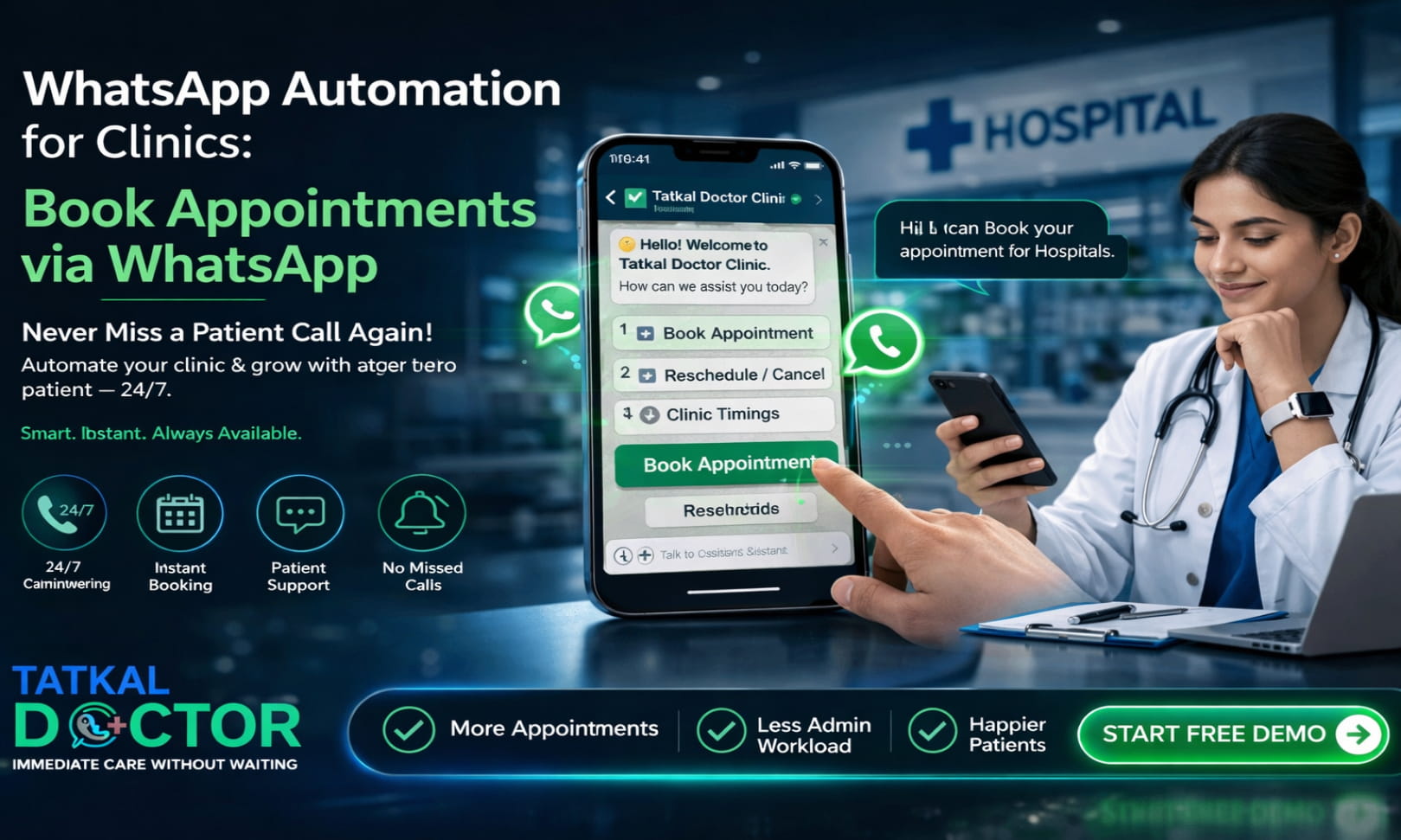
An online appointment system for hospitals powered by WhatsApp doesn’t feel like traditional software—it feels like a natural conversation.
A patient sends a message like “Book appointment,” and the system responds immediately. It shows available doctors, suggests time slots, and confirms the booking without delay.
Behind the scenes, the system organizes schedules, prevents overlaps, and keeps everything running smoothly.
From the patient’s perspective, it feels effortless. From the hospital’s side, it brings much-needed efficiency.
Reduced Waiting Time and Better Patient Flow
One of the first improvements hospitals notice is a reduction in waiting time.
When appointments are scheduled in advance through WhatsApp, patients arrive at planned times instead of gathering all at once. This leads to:
Better crowd management
Shorter waiting periods
More predictable daily schedules
Patients feel more relaxed, and hospital staff can focus on providing care instead of managing long queues.
Fewer Missed Appointments and No-Shows
Missed appointments are a silent challenge for hospitals. Empty slots don’t just waste time—they directly affect revenue and efficiency.
With WhatsApp automation, reminders are sent automatically before the appointment. Patients can confirm, reschedule, or cancel with ease.
This small improvement creates a noticeable impact. Hospitals using hospital automation in India often see a clear reduction in no-shows because patients stay informed and engaged throughout the process.
Improved Staff Efficiency Without Extra Hiring
Reception teams often spend a large part of their day answering the same questions—doctor availability, timings, and booking confirmations. It’s repetitive and time-consuming.
With WhatsApp healthcare solutions in India, these routine interactions are handled automatically.
This allows staff to shift their focus toward patients who need direct assistance. The result is better productivity—without the need to hire additional staff.
Consistent Communication Builds Patient Trust
Patients appreciate clarity. When different staff members provide different answers, it creates confusion and uncertainty.
An automated online appointment system for hospitals ensures that every patient receives accurate and consistent information.
Whether it’s appointment confirmation, timing details, or reminders, everything is communicated clearly.
Over time, this consistency builds trust. Patients begin to feel that the hospital is organized, reliable, and easy to deal with.
Real-Time Scheduling Without Errors
Manual booking methods often lead to errors—double bookings, missed entries, or scheduling conflicts.
Automation removes these risks. The system updates availability in real time, so once a slot is booked, it’s no longer available to others.
This not only prevents confusion but also improves the overall experience for both patients and staff.
A More Comfortable Experience for Patients
Healthcare can already be stressful, and complicated processes only make it harder for patients.
WhatsApp-based systems simplify everything. Patients can:
Book appointments anytime
Receive instant confirmations
Get reminders without needing to follow up
Reschedule easily when plans change
It creates a smoother, more comfortable experience—one that respects the patient’s time and situation.
Why Tatkal Doctor Makes This Transition Easier
Adopting automation may sound simple, but implementing it correctly is where many hospitals struggle. This is where Tatkal Doctor brings practical value.
Their approach focuses on real hospital workflows, not just theoretical solutions. They understand how patients behave and how hospitals operate on a daily basis.
What makes their approach effective:
Easy integration without disrupting existing systems
Custom setups tailored to each hospital’s needs
Ongoing support to improve and refine performance
A strong focus on usability rather than complexity
They don’t just provide a system—they ensure it works seamlessly in real-world conditions.
Cost vs Long-Term Efficiency
Many hospitals hesitate when they hear about automation, often due to concerns about cost. But a more important question is—what is the cost of inefficiency?
Missed appointments, overworked staff, and poor patient experiences all carry hidden costs over time.
When hospitals adopt hospital automation in India through WhatsApp, they often see improvements not just in efficiency, but also in overall revenue.
It’s not simply an expense—it’s a step toward better resource management.
The Shift Toward Smarter Healthcare Systems
Patient expectations across India are changing. People now expect services that are quick, simple, and reliable. Healthcare is no exception.
Hospitals that adopt WhatsApp healthcare solutions in India are aligning themselves with these expectations.
They are not just improving internal operations—they are improving how patients perceive and experience their services.
Key Takeaway
Automating appointments through WhatsApp is no longer just a modern upgrade—it’s becoming a practical necessity for hospitals in India.
With the right online appointment system for hospitals, daily operations become smoother, staff workload decreases, and patient satisfaction improves.
Solutions like those offered by Tatkal Doctor make this transition simple, effective, and easy to manage.
For hospitals aiming to grow while maintaining quality care, this isn’t just about adopting new technology—it’s about creating a better, more reliable experience for every patient.