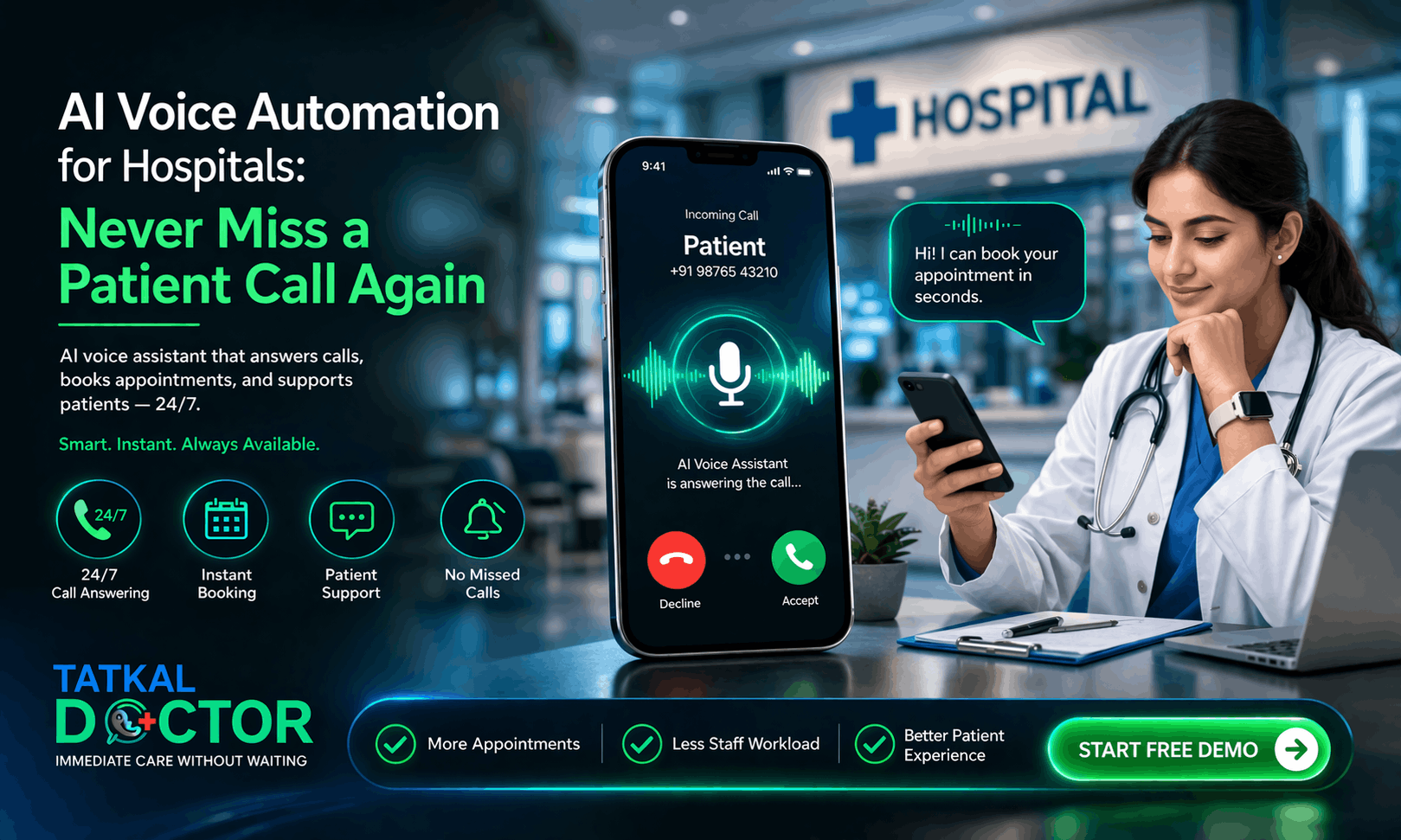
The Real Problem Clinics Face With Missed Calls
Every missed patient call isn’t just a missed conversation—it’s a missed chance to help someone who actually needs care. In a busy clinic, the front desk is constantly juggling walk-ins, paperwork, and phones that just don’t stop ringing. In that chaos, it’s completely natural for calls to get missed or delayed.
This is exactly where AI voice automation for clinics is quietly making a real difference. Instead of depending entirely on human availability, clinics are now using smart systems that ensure every patient call is answered instantly, professionally, and accurately—no matter how busy things get or what time it is.
How AI Voice Automation Actually Works in a Clinic
An AI call answering system for clinics is not the old-style IVR that makes patients press buttons and wait endlessly. It’s conversational, responsive, and designed to feel natural.
When a patient calls, the system greets them, understands what they’re saying, and responds in a way that actually makes sense. It can book appointments, answer common questions, and even prioritize urgent cases.
For example, if someone calls to schedule a visit, the system can:
- Check available slots in real time
- Suggest suitable timings based on availability
- Confirm the appointment instantly
-
Send a follow-up message via WhatsApp or SMS
All of this happens smoothly, without human involvement—yet it doesn’t feel robotic or cold.
Why Traditional Call Handling Fails at Scale
Most clinics still rely heavily on receptionists, and while they play a critical role, they can only do so much. During peak hours, even the most efficient staff can’t handle multiple calls at once.
What happens next is predictable—patients are kept waiting, some hang up, and others simply move on to another clinic.
Here are the common issues clinics face:
- Long hold times that frustrate patients
- Missed calls after working hours
- Inconsistent information depending on who answers
-
Manual errors while booking appointments
This is where automated patient call handling shifts from being a convenience to becoming a necessity.
What Makes AI Receptionists Different
An AI receptionist for medical clinic environments isn’t there to replace your staff—it’s there to support them. Think of it as a reliable assistant that never takes a break and handles repetitive communication effortlessly.
Unlike traditional systems, AI can:
- Understand natural language instead of just keypad inputs
- Manage multiple calls at the same time
- Maintain a consistent tone in every interaction
-
Continuously learn and improve from conversations
It doesn’t get tired, overwhelmed, or distracted. And that level of consistency builds trust with patients over time.
Practical Benefits Clinics Notice Almost Immediately
When clinics implement a hospital voice automation system, the impact is often visible within weeks. These aren’t abstract benefits—they show up in daily operations.
Here’s what usually changes:
- No more missed calls: Every patient gets a response, even after hours
- Faster appointment booking: No waiting for staff to become available
- Reduced workload: Receptionists can focus on patients physically present
-
Better patient experience: Quick responses create a sense of reliability
One clinic owner summed it up perfectly:
“Earlier, we were losing patients before we even spoke to them. Now, every call turns into a real conversation.”
A Day in a Clinic With AI Voice Automation
Picture a small clinic during peak evening hours. The waiting area is full, and the phone keeps ringing non-stop.
Instead of stress building up, the AI system quietly handles incoming calls in the background. One patient books an appointment, another checks doctor availability, and someone else asks for directions.
Meanwhile, the receptionist is fully focused on the patients standing right in front of them.
The environment feels calmer, more organized, and far more efficient. No missed calls, no confusion—just smooth coordination.
Addressing Concerns About AI in Healthcare Communication
It’s completely normal to wonder whether patients will feel comfortable speaking with AI. The truth is, it depends on how well the system is designed.
Modern solutions are built to sound natural and helpful, not robotic or scripted. They handle routine queries efficiently and seamlessly transfer complex or sensitive situations to human staff when needed.
That balance is important—it keeps operations efficient without losing the human touch.
Privacy is another key concern, and reliable providers ensure secure data handling and compliance with healthcare standards.
Why Tatkal Doctor Stands Out in This Space
Choosing the right technology is only half the job. The real challenge is implementing it in a way that actually works for your clinic. That’s where Tatkal Doctor makes a noticeable difference.
Their approach is practical and grounded in real clinic needs. Instead of offering generic solutions, they design systems specifically for healthcare workflows.
What makes them stand out:
- Solutions tailored to how clinics actually operate
- Smooth integration with existing appointment systems
- Strong understanding of patient behavior in India
-
Continuous support to improve and optimize performance
They don’t overcomplicate things. The goal is simple—help clinics start using automation effectively from day one.
When Does a Clinic Actually Need AI Voice Automation?
Not every clinic adopts automation immediately, but certain signs make it clear when it’s time:
- Calls are frequently missed or unanswered
- Staff feel overwhelmed managing phone inquiries
- Patients complain about delayed responses
-
Appointment scheduling becomes messy or inefficient
If these challenges sound familiar, waiting too long can cost more than the solution itself.
Cost vs Value: A Practical Perspective
Cost is often the first concern for clinic owners, and that’s understandable. But it helps to look at it from a different angle—how many patients are being lost because calls go unanswered?
Even missing 10–15 calls a day can translate into significant lost revenue over time. In comparison, an AI call answering system for clinics often pays for itself by converting those missed calls into confirmed appointments.
It’s not just about spending money—it’s about improving how the clinic operates.
The Shift Toward Smarter Patient Communication
Patient expectations have changed. People want quick responses, clear communication, and easy ways to book appointments.
Voice automation fits naturally into this shift. It doesn’t replace doctors or human interaction—it strengthens the communication layer around it.
Clinics that adopt these systems early often gain a competitive edge, especially in busy cities where patient experience directly influences decision-making.
Key Takeaway
Missing patient calls doesn’t have to be part of running a clinic anymore. With the right use of AI voice automation for clinics, every call becomes an opportunity instead of a risk.
The combination of speed, consistency, and round-the-clock availability transforms how clinics connect with patients—without putting extra pressure on staff.
Solutions like those offered by Tatkal Doctor make this transition practical and effective. For clinics that want to grow while maintaining quality care, this isn’t just an upgrade—it’s a smarter, more reliable way to run