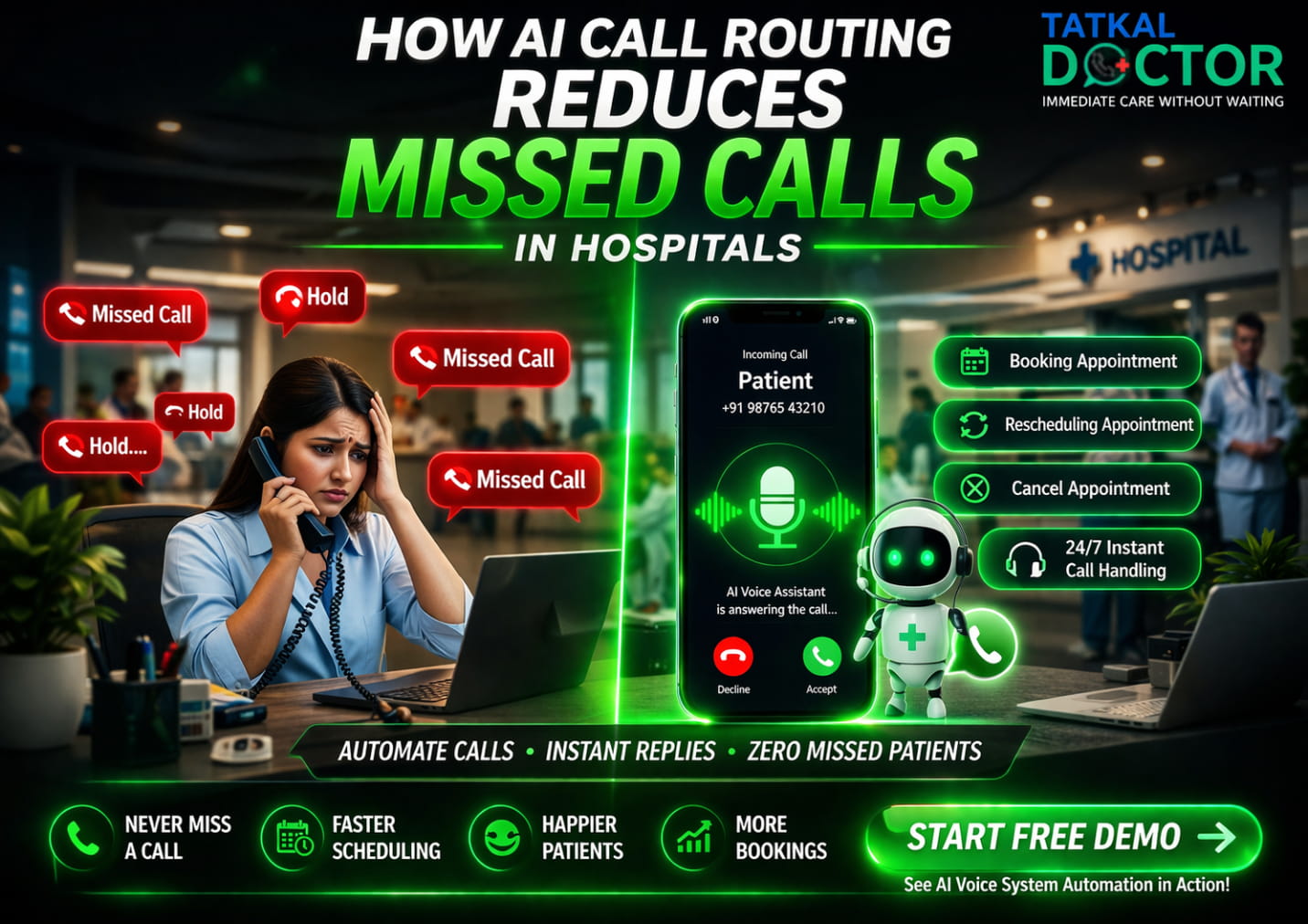
Why Missed Calls Are a Bigger Problem Than Hospitals Realize
A missed call in a hospital isn’t just a small operational issue—it can mean a lost patient, a delayed consultation, or, in some cases, a serious health concern left unattended. In many hospitals, especially during peak hours, phones keep ringing while staff are already occupied with patients at the front desk. Calls either go unanswered or are picked up too late.
This is exactly where AI voice agents in healthcare are beginning to make a meaningful difference. Instead of depending entirely on human availability, hospitals are turning to smarter systems that ensure every incoming call is handled promptly and professionally. The goal isn’t just efficiency—it’s dependability.
How Traditional Call Handling Breaks Down
Most hospitals still rely on reception teams to manage calls manually. While this approach works during quieter hours, it starts to fall apart when call volumes increase.
A receptionist can only manage one conversation at a time, while multiple patients may be trying to connect simultaneously.
This leads to familiar challenges:
Calls going unanswered during busy periods
Patients being placed on long holds
Important queries getting delayed or missed entirely
Growing frustration for both patients and staff
Over time, these small inefficiencies add up, quietly affecting patient trust and hospital performance.
What AI Call Routing Actually Does
Healthcare call routing automation changes the way incoming calls are handled. Instead of relying on a single point of contact, the system distributes calls intelligently based on what the patient needs.
When a call comes in, the system can:
Understand the caller’s intent through natural conversation
Route the call to the right department instantly
Handle basic queries without human involvement
Prioritize urgent or emergency-related calls
The result is a smoother flow where calls don’t pile up—they are handled efficiently and without confusion.
Why Timing Matters More Than Anything Else
One of the main reasons hospitals miss calls is timing. Patients reach out when it’s convenient for them—not necessarily when the hospital is ready to respond.
Even a short delay can make a difference. If a patient doesn’t get a response within seconds, they are likely to disconnect and try another option.
With an AI call routing hospital system in place, responses are immediate. The system answers instantly, engages the caller, and directs them appropriately.
This removes the critical gap between patient intent and hospital response—the exact moment where most opportunities are lost.
A Real-World Scenario You’ll Recognize
Imagine a hospital during the morning rush. The reception area is crowded, staff are busy checking in patients, and the phone keeps ringing in the background.
Now picture a different scenario. Every call is answered instantly by an AI system. One caller books an appointment, another asks about lab reports, and a third is routed to the emergency department.
Meanwhile, the front desk staff focus entirely on the patients standing in front of them.
The environment feels calmer, more organized, and significantly more efficient.
Reducing Missed Calls Without Increasing Staff
Hiring more staff might seem like the obvious solution, but it isn’t always practical or sustainable. Training, coordination, and maintaining consistency add their own challenges.
This is where AI voice agents in healthcare offer a smarter approach. They don’t replace human staff—they support them by handling repetitive and high-volume interactions.
The impact is clear:
Fewer missed calls
Faster response times
Reduced pressure on reception teams
Hospitals can handle higher call volumes without increasing their workforce.
Improving Patient Experience Through Better Communication
For patients, the experience begins the moment they try to contact the hospital. If that first interaction is frustrating, it shapes their overall perception.
With healthcare call routing automation, patients receive immediate attention. Their queries are acknowledged, and they are guided to the right department without confusion.
Even when the system handles the initial interaction, it feels structured and helpful rather than impersonal.
This builds confidence and encourages patients to return.
Handling Multiple Calls at Once—Without Chaos
One of the biggest limitations of manual systems is their inability to scale. As call volume increases, so does the pressure on staff.
An AI call routing hospital system, however, can handle multiple calls simultaneously without any drop in quality.
Whether there are five calls or fifty, each one is managed efficiently. No one is left waiting, and no call is overlooked.
This scalability is what makes automation especially valuable in busy hospital environments.
Why Tatkal Doctor Brings Practical Value
Technology alone doesn’t solve problems—implementation does. This is where Tatkal Doctor stands out.
Their approach is rooted in real hospital workflows, not generic solutions. They understand how patient communication actually works and design systems that fit seamlessly into daily operations.
What makes their approach effective:
Easy integration with existing hospital systems
Customized call routing based on departments and needs
Ongoing support to refine and improve performance
A strong focus on usability, so staff can adapt quickly
They don’t just introduce automation—they ensure it works smoothly in real-world conditions.
Cost vs Missed Opportunity
Many hospitals hesitate when considering automation, often focusing on upfront costs. But a more important question is—what is the cost of missed calls?
Every unanswered call could mean a lost consultation, delayed care, or a patient choosing another hospital.
When hospitals adopt healthcare call routing automation, they’re not just improving efficiency—they’re capturing opportunities that would otherwise be lost.
In many cases, the system quickly justifies its cost by improving patient conversion and retention.
The Direction Healthcare Communication Is Moving
Patient expectations are changing. People now expect quick responses, clear communication, and minimal effort when reaching out to a hospital.
Solutions like AI voice agents in healthcare align naturally with these expectations. They remove delays, reduce confusion, and create a smoother communication experience.
Hospitals that embrace this shift are not just improving operations—they are strengthening their connection with patients.
Key Takeaway
Missed calls don’t have to be a routine problem anymore. With the right AI call routing hospital system, every call can be answered, managed, and directed efficiently.
AI voice agents in healthcare and healthcare call routing automation provide a practical way to reduce missed opportunities, improve patient experience, and support hospital staff without adding extra pressure.
Solutions like those offered by Tatkal Doctor make this transition simple and effective.
For hospitals aiming to grow while maintaining quality care, this isn’t just about adopting new technology—it’s about ensuring every patient feels heard from the very first call.